- Episode Theme: The Moment Before the Moment – Pre-Olympic Reflections
Questions:
- What’s running through your mind as you count down to the Games — excitement, nerves, pride, fear?
I think there’s a lot of nerves and anticipation because you still don’t know if you’ve made the games yet until a week or two before they start. This would be my first Olympics, and if I’m able to qualify for the Games it would be the fulfillment of a childhood dream. It would just be almost a relief and sort of a confirmation that all the sacrifices you and your family made to get to this point were worth it. Which is funny because we compete at races with the same level as the Olympics almost every weekend, but it’s still something special, especially as an American.
- What does success really look like for you in Cortina — beyond medals?
Success would be to just ski to my potential, and be able to showcase the hard work that I and everyone around me has put in for so many years now. The result will be what it will be, but as long as I can go out and not be afraid to take risks and ski with my heart on my sleeve, there’s nothing more to ask for.
- When you close your eyes and imagine walking into the start gate, what do you feel?
I imagine it to feel something different and monumental to be in an Olympic start gate, but to be honest I will do everything in my power to make it feel like just another race. Everything around has a heightened level of anticipation, but at the end of the day ski racing is ski racing no matter the venue and you want to be able to perform at your best. I think it’s quite rare to magically pull something out on race day that you have never been capable of before, so it more realistically comes down to trusting yourself and the work you’ve put in to ski at your highest level. Nothing more, nothing less. As boring as that is.
- How do you want people to remember your run, or your approach, once it’s over?
I want people to remember the team that got me to where I am today and to remember that I’m the product of hard work and persistence. Knowing that after enough years in the darkness just quietly working as hard as you can, you’ll get your opportunity to showcase all that you’ve put into this. And hopefully I can be a good example of that once these Games arrive.
- What have you learned about yourself through this process that has nothing to do with skiing?
I’ve gotten to know myself better than I could have imagined over this process. Not just preparing for the Games, but everything over the last 15 years of my career. Especially during the hard times and the struggles, that’s where you really find what motivates you and if you have the discipline to keep pushing or not. Being an athlete starts out obviously just fun and games, but you quickly realize how much you have to sacrifice to have a chance of being the best at something. And then you have to decide if the personal growth and journey this puts you on is worth all those sacrifices. Personally, no matter what the sport or environment is, to just have a chance to try to be the best in the world at something is incredibly special. To take that leap of faith, knowing that it’s almost guaranteed to fail, is a magical thing because it demands of you a level of courage and humility that it quite difficult to find in other avenues of life. So Games or not, successes or not, I wouldn’t trade the lessons I’ve learned through this process for anything.
This is the end of this question series, but if you’re still reading I appreciate you following along! Fun to look back and see how I was approaching all of this when I wrote everything last fall and was fighting the nervousness surrounding Olympic qualification through the first part of the season. I’m headed off to school now to do my 5th of 12 eventual terms to earn my degree, so lots of (different) work to look forward to. Cheers
- Episode Theme: Chemistry, Trust and Travel
Questions:
- How would you describe the energy or personality of this team — what makes it unique compared to other teams you’ve been on?
This team is sort of split into two parts, the 3 veterans who’ve been around the tour for a while, and the 3 younger guys (including myself) who are trying to get established and make a name for ourselves. The two other young guys (Erik Arvidsson and Sam Morse) are two of my closest friends, and it’s a blast to be trying to break through together on the world’s stage. And we’re close with the older guys too. Everyone works really well together and I think the young crew can bring some fresh fire and energy while learning from the experience and previous success the older guys bring to the table. But above all, I think our whole group prides itself on being a bit of the underdogs, as you always are when you’re American. As opposed to Austrian or Swiss teams, where skiing is so ingrained in the culture and where you would compete close to home most of the year, we as Americans are together on the road for months on end. This makes for a really close-knit team who relies on each other for that support network and is hungry to prove the depth of American skiing.
- Who’s the glue — the one who keeps everyone laughing or motivated on tough days?
The beauty of this team is that everyone can fill that role when needed, because everyone has good days and bad days. We don’t have that singular leader figure like some teams, but instead work together as a group of equals where everyone can bring the team up on a given day. And it’s nice because then you don’t have those moments where your “glue guy” skied poorly or isn’t feeling it and the whole team’s mood suffers accordingly.
- What’s a travel or training story that captures what life on the road is really like?
My first World Cup slalom race ever was in Adelboden, Switzerland. I had been doing some races in North America right before it and was qualified to compete in this race for the first time, so I flew over straight from my races in upstate New York directly to Zurich. But when I showed up my bags were nowhere to be found, and the airline had no idea where they were. So here’s this huge race and something that I’ve trained my whole life to prepare for, but last minute travel hiccups end up leading me to run around like a chicken with my head cut off and borrow skis, a speedsuit, helmet, and other gear from my competitors for the race. It’s these moments where you quickly learn how many things are out of your control, so it’s best to not take yourself so seriously and just try to roll with the punches as they come.
- How do you support each other when things go wrong — an injury, a bad result, burnout?
Things will always go wrong or not as you planned them; that’s one of the constants of life. But having friends and teammates in your corner goes a long way in helping move past these things. I think just the practice of everyone having the belief in the other guys around them goes a long way, so that on days where you don’t necessarily believe in yourself, there’s enough people around you that do believe in you. Which lifts you right out of the hole. Also, everyone has been through injuries and disappointing seasons, so people get the headspace you’re in at that time and really do want to help. It’s like you would with any friend really; being teammates and almost brothers on the road is no different than how you would support one of your best friends at home. A rising tide lifts all ships, so you want to get the best out of your teammates and competitors as well.
- What’s something the public might not understand about the bond between racers?
I think people assume we’re a lot more harshly competitive with each other than we really are. It’s different to a sport like football or something where you can talk trash to your opponents and make some enemies and that’s a fun part of the game. Instead, everyone is so supportive of the other guys and generally quite laid back. I think, especially among downhill skiers, it comes down to the fact that everyone understands the risks and the sacrifice that their competitor is willing to take because they take them themselves, and anyone ready to risk their life for this sport earns a certain level of respect. So there’s very few personalities on tour that are universally disliked or are generally rude. Instead everyone is quite close and wants to help. All the guys are pretty open with what works for them and what they’re thinking about in the races instead of trying to guards their secrets in the fear that someone will learn their trick and beat them with it.
- Episode Theme: The Human Behind the Helmet
Questions:
- What’s your go-to pre-race song or pump-up anthem — and what’s a song you’re embarrassed you love?
I don’t really listen to music before I race honestly, but if I do it’s gotta be to get more relaxed and not more pumped up. There’s enough nerves anyway at the top of a downhill so too much intensity is sometimes a bad thing for me.
But I’ll go for any old 2000’s-era Taylor Swift if I’m on a road trip and want to sing along (alone).
- Describe your travel vibe: are you the early bird, the napper, the playlist DJ, the snack hoarder, or the team prankster?
I’m the food guy – always planning where our next meal is gonna be as soon as we finish the last one. I’m lucky I’m an athlete since it gives me a good excuse to eat as much food as I can in the name of recovery.
- What’s the most superstitious or weird thing you do before a race?
I do my best to not be superstitious and instead trust in all the work I’ve put in the get to this point. That said, I’ve worn the same socks racing for the last couple years so I’m a bit hypocritical there.
- What’s your comfort food, secret hobby, or guilty pleasure when you finally get a day off?
My teammate Sam Morse and I are both super bad at sitting inside and chilling out on a rest day, so we’ve been looking for different activities we can do that don’t involve making our legs even more tired than they already are. So we’ve started rock climbing on our off days since the valleys in Europe are almost always dry in the winter, and we can go have a big adventure and feel like we did something cool with our day while still giving our ski-specific muscles a day off.
- If skiing didn’t exist, what would you be doing instead — and how different (or similar) would that version of you be?
If skiing didn’t exist I think I would be in medical school right now. Or I guess on second thought I would be done with medical school and would be practicing as a doctor already. Crazy to think about considering I’m still partway through my undergrad at the moment. But this was always my goal as a kid, and I think in large part because I’m the same version of myself no matter what. I always need some ambitious goal to sort of center my life around and allow me to buckle down and work really hard. So although that purpose is skiing at the moment, I think it could just as easily be medicine or something else challenging intellectually. That’s what my parents tried to teach growing up. We don’t care what you’re excited about and we’ll support you no matter what; but the rule is you have to be excited and passionate about something. Can’t be nothing.
- Episode Theme: The Daily Grind
Questions:
- Walk us through a training day — what time do you wake up, what does your body feel like, what’s the mental rhythm?
Training days have a huge variety based on where you are in the season, from easy sunny low-pressure spring training camps in California to dark icy early morning sessions in the middle of January. But in general, the days are still somewhat similar, and far more busy than people expect. We’ll wake up at 6ish, give or take based on where we are and when the sun come up, hit an early breakfast, and then do a physical warm-up to get the body moving. Then it’s time to hit the road to wherever we’re training that day, and once we get to the lodge, do another more ski-specific physical warm-up and get all our gear on. We head up and get to training after a few warm-up runs and a quick look at the course set for that day. After training the day keeps going, with lunch and back to the hotel. We move straight into physical therapy, then a workout (either lifting weights or a core session or an endurance session). From there it’s on to watch video of the day’s training and talk with the coaches about what needs fixing, and then to the ski rooms to meet with our ski technicians and make a plan equipment-wise for the next day. Finally it’s off to dinner and bed to start it over again the next day! A bit groundhog-day-like at times, but I weirdly love the routine.
- What’s something about training that most people would never guess — a weird ritual, an unglamorous moment, or a daily habit that keeps you grounded?
I think people overestimate the amount of packing and unpacking we have to do on a daily basis. We move places every handful of days for the entire winter, and every time have to pack and unpack probably 10-15 pairs of skis. And that’s not including our personal duffel bags with clothes and your ski bag with all your ski gear as well. So we get quite good at being efficient with packing our stuff and finding a system that works where you don’t have to put too much thought into it anymore. But certainly not the most glamorous part of the job.
- How do you balance the repetition and grind with the joy that got you here in the first place?
For me it’s always been super helpful to remember that I chose to do this for a career and every day intentionally decide to make these sacrifices. And as long as I keep that somewhere in the back of my mind, it no longer seems like a grind but instead something that comes along as part of the job and enables me to do what I love for a living. Because every job has some sort of downside. So for me the long days in the gym or hours spent packing bags is my equivalent to a doctor having to spend a few hours filling out forms and doing computer work instead of treating patients. And if that’s the most annoying part of my job, I can live with that any day.
- When do you know you’ve had a “good day” on snow or in the gym?
I try to think of “good” or “bad” days as mainly effort-related. As long as I can finish every day and think that I gave it 100% of my focus and effort while I was on the hill, then I think that’s all I can ask of myself. Whether I won the day’s training or lifted more than ever before or if I just sucked, it really makes no difference as long as I did my utmost to be professional and get that tiny percent better. Because in the long run I think that showing up every day and putting in the work consistently is what pays off. Consistent small difference on a big time scale are game-changing.
- Can you recall a single breakthrough — a run, a feeling — when everything just clicked?
I’m not sure if I had a single moment per say, but the most similar thing I can think of is when I was in high school and broke both of my hands 1 month apart. So I couldn’t hold a ski pole in either hand, but I still wanted to go train so I managed to fit some oven mitts over my casts and go train GS. I skied for probably a month straight with no poles, and suddenly when I was allowed to use my full hands again and get my poles back, I realized I had found this newfound comfort and center of balance and was able to be so much more athletic on skis. So I recommend that to anyone looking to get better. Spend even a few runs without your poles, and when you get them back, you’ll feel like a hero.
- Welcome Back
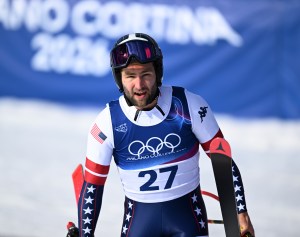
Not that I was the world’s most regular blogger, but I took a break for a bit over the last year to really focus on this Olympic season and make sure I was doing everything in my power to stay focused on what I needed to do. For me this means staying away from social media as much as I can and other forms of media as well since I find I’m just happier and more present in general when I don’t feel pressured to always post something or share my life with the world. However, I wrote a series of blog posts for one of my partners (Aztech Mountain) earlier this winter and they allowed me to share my thoughts on here as well. They wanted to really dive into the lead-up to the Olympics and tell the story of that process as it was unfolding in real time for a couple different athletes, from how we started imagining this experience as a possibility to what our days look like now as professional athletes. Anyway, I’ve copied the first series of questions below, with 4 more to follow!
Episode Theme: Origins + Motivations
Questions:
- When did you first realize skiing was more than a hobby — that it could shape your life?
Skiing was always part of my life, but honestly I could never really imagine myself doing it as a career. I was only skiing really part-time until I was midway through high school, and then finally made the leap to move up to the ski academy in Vail and give this everything I’ve got. But even then, I only saw skiing as a way to get into a good college and hopefully help with some scholarship money. During my postgraduate year I was selected to compete at the Junior World Championships in Switzerland, my first time ever racing outside of the US. I came in 6th in the Super G, and had this realization that all these kids in Europe that you grow up hearing about aren’t any better than we are at home in the US. I realized that if I kept doing my best to outwork anyone else in the world that I would one day be racing against, I would eventually catch up and be able to compete with anyone I wanted. Fast skiing wasn’t this abstract concept anymore that I put on a pedestal. And suddenly I started having more success as soon as I got home, winning the North American tour the very next year and earning my spot to start racing World Cups and skiing as a professional.
- Who or what first pushed you out of your comfort zone on snow?
I was lucky to have some of my best friends to grow up skiing with. Everyone was a good skier, and more importantly, had the time of their lives being outside in the mountains with their friends. We spent more time freeskiing and hitting the terrain park than we did training, and built a comfort zone and risk tolerance that terrified our parents and that still drives my downhill racing to this day. We quickly learned to be comfortable with being uncomfortable, and to actively seek that feeling. This allowed us to push each other to go bigger or crash harder than we ever could have on our own.
- What’s a vivid memory from your early days on skis — a podium, a crash, a breakthrough, a funny moment — that still defines your love for it?
We had a race at Breckenridge when I was probably 10 years old that I remember being brutally cold. Not just chilly but like -10 degrees brutally cold. And when you’re 10 years old, you want absolutely nothing to do with that. My friends and everyone at the race were complaining about how their feet were freezing and they didn’t want to be there, but I remember thinking there was no place in the world I would rather be. Give me this any day over relaxing by the pool and not being able to ski anymore. Getting to go compete against my friends doing what I loved was always my biggest driving force, and still spurs me on today.
- How has your relationship with skiing changed from childhood joy to professional discipline?
Certainly skiing is certainly a bit more of a job nowadays, at least on some days, but I try to be very intentional about finding joy in the little things and remembering how lucky I am to do this for a living. Every result has a bit more weight to it now, but at the end of the day, I’m still getting to do the same thing I did every weekend as a kid and what I would try to still be doing every weekend now, whether it was my career or not. And it’s easy on the sunny days where you feel good and motivated, but the difference in doing this for a living comes on the days where you’re cold and your body hurts and you don’t feel like mustering up the motivation to go lift weights after a full week of training. That’s where this “professional discipline” comes to play. Fortunately this part always came fairly easily to me. Juggling so many things growing up, between trying to take school seriously and play 4 different sports, I had to grow up early with regard to managing my time and being disciplined about what I could do for fun outside of my commitments. That said, I don’t view this as something that’s at odds with keeping the joy in skiing. Having the discipline and professionalism needed actually allows me the peace of mind to truly enjoy what I’m doing since I know I’ve taken care of everything else on the periphery. Then all that’s left to do is go ski and feel free.
- When you picture that kid version of yourself, what would they think of where you are now?
I think they would be a bit surprised that we’ve made it this far, considering I barely knew anyone growing up who had even ski raced at all, let alone professionally. That said, I had an idea when I was a bit older, a teenager maybe, that I would be able to find a way to keep pursuing both my passions of playing sports at a high level and school as well. So to be racing on the World Cup and chipping away at my Dartmouth degree would seem like a combo they could be proud of. But I think anyone still skiing would be able to say their younger self would be proud. The more important thing is that the younger version of myself could’ve never imagined the road it took to get here. The crashes and celebrations and injuries and near-retirements along the way; that’s something they never could have seen coming. But I think even if they did, they’d continue either way. Because regardless of how it turns out, committing to something bigger than yourself and enjoying the process of getting better each day is what it’s all about.


